Home » Blog » Sciatica Exercises to Avoid (and Safer Alternatives to Try Instead)

Sciatica Exercises to Avoid (and Safer Alternatives to Try Instead)

Dr. Shahen Simian, DC
October 13, 2026
Categories: 
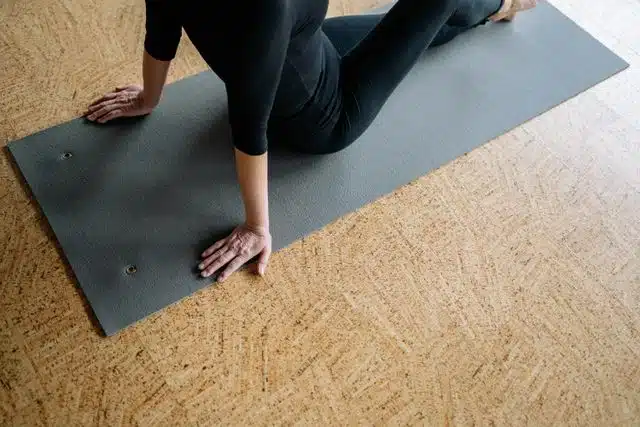
Person performing a gentle prone press-up exercise on a mat as a safe sciatica alternative.
Living with sciatica can make even basic daily movements feel like a gamble, leaving you desperately searching for simple exercises that bring real pain relief. But if your current exercises cause more pain, you are likely worsening the nerve irritation.  Pain is your body’s way of signaling that something isn’t right. Ignoring sharp discomfort or trying to push through it often sets recovery back rather than speeding it up. That’s why our focus is on guiding you through a safe, effective movement routine. We’ll outline the sciatica exercises to avoid, explain why they trigger pain, and highlight safer, gentler alternatives to add to your list.

Why Certain Exercises Aggravate the Sciatic Nerve

The sciatic nerve is the longest nerve in your body. It begins in the lower back, runs through the hips, and travels down each leg. Sciatica develops when part of this nerve is pinched or irritated where it exits the spine. Because the nerve is already sensitive, some movements act like pressing on a bruise or tugging on a tight cable. That’s why bad exercises for sciatica often fall into four familiar patterns:
  • Repeated forward bending: Rounding your lower back over and over squeezes the spine's discs against the nerve root.
  • Heavy spine compression: Stacking heavy weights straight down onto your body puts pressure on an already irritated lower back.
  • Twisting while holding weight: Rotating your torso hard while lifting or holding something forces the spine in a vulnerable position.
  • Aggressive hamstring stretches: Pulling your leg into deep, end-range stretches puts direct tension on the sensitive nerve pathway rather than stretching the muscle.
Not all workout discomfort is harmful. A mild burn or muscle fatigue is normal, but sharp, shooting, or electric‑shock pain (especially when it travels down the leg with tingling or numbness) is a clear sign of nerve distress, not muscle work. That’s your body’s clear signal to stop immediately.  This pattern shows up in both weightlifters and desk workers. Generic “forbidden exercise” lists don’t always capture the nuance, because what flares one person’s sciatica might be safe for another with the right setup.  Understanding these triggers and knowing the safer alternatives make all the difference in keeping pain from escalating.

Sciatica Exercises to Avoid, Grouped by Movement Pattern

Rather than memorizing a random top-ten, it helps to learn the exercises to avoid with sciatica by movement pattern, so you can spot a risky move you have never even tried. Each group below names a few common offenders and the reason they irritate the nerve.

Forward-Bending and Spinal Flexion Moves

Woman performing a standing toe touch.

Exercises like seated or standing forward folds, sit‑ups, crunches, and toe‑touches repeatedly round the lower back. That rounding presses the spinal discs backward, right into the nerve root that’s already irritated. A neutral-spine core exercise gives you the same work without the pinch.

Heavy Axial Loading

Weighted back squats, stiff‑leg deadlifts, loaded lunges, and good mornings all stack weight directly down the spine. For someone with sciatica, that downward force can worsen pain where the nerve exits. Lighter, supported versions of these lifts provide similar benefits while lowering the risk of flare‑ups.

Twisting Under Load

Russian twists, weighted woodchoppers, and cable rotations combine spinal rotation with heavy resistance. Twisting under load stresses the spinal joints and can pinch the sciatic nerve. A safer alternative is anti‑rotation training, which consists of exercises that teach your core to resist twisting rather than create it.

High-Impact and Explosive Moves

High-energy moves like burpees, box jumps, sprint intervals, and uphill running send repeated shockwaves through the lower back. Hard landings plus fast bending are a recipe for nerve irritation. Low‑impact cardio, like cycling or swimming, keeps you moving without the jarring forces.

Aggressive Hamstring and Nerve-Stretching Moves

Deep movements such as hurdler stretches, pigeon pose, double‑leg raises, or hard straight‑leg stretches often tug on the sciatic nerve itself. They may feel good, but they can actually target a nerve that runs alongside your hamstrings and cause tension. Gentle stretches with bent knees are far safer and still help ease tightness. Here is a summary to help you plan your exercises.
Movement pattern Common aggravating move Safer swap
Spinal flexion Sit-ups, toe-touches Dead bug, bird dog
Heavy axial loading Weighted back squat Goblet squat to a box
Twisting under load Russian twist Side plank, Pallof press
High-impact and explosive Burpees, box jumps Walking, stationary bike
Hamstring or nerve stretch Hurdler stretch Bent-knee supine stretch with a strap
A quick way to gauge whether a move is safe: if a move only produces mild low-back tightness with no leg symptoms, you may be able to keep it with a small form correction. If it produces radiating leg pain, tingling, or numbness, stop that move right away.

Weight Lifting Exercises to Avoid With Sciatica

You do not have to quit the gym. Knowing the weight-lifting exercises to avoid with sciatica lets you keep training while your nerve settles. As a chiropractor who trains weightlifters and CrossFit athletes, Dr. Simian notes that these four lifts are the most common sciatica flare‑ups:
  1. Barbell back squat under load: Squeezes your lower back discs while your spine naturally bends at the bottom of the movement.
  2. Conventional and stiff-leg deadlift: Deep hip hinging pulls hard on both the hamstrings and the sciatic nerve running right beside them.
  3. Bent-over barbell row: Forces your lower back to hold a rounded, unsupported position while holding weight.
  4. Heavy-loaded lunges: Single-leg weight loading tilts the pelvis and places uneven compression on one side of the spine.
Healing doesn't mean a total gym ban; it means adapting your routine step-by-step:
  • Step 1: Lower the weight and refine your movement. Try goblet squats, trap-bar deadlifts, or chest-supported rows.
  • Step 2: Shorten your range of motion. Switch to box squats or parallel-bar deadlifts.
  • Step 3: Swap the lift entirely. Use a neutral-spine leg press, hip thrusts, or single-arm dumbbell rows.
As a reminder, never try to power or brace through nerve pain. While pushing through muscle fatigue is a normal part of training, experiencing sharp or radiating leg pain is a clear warning sign to stop before compromising your recovery.

Match Your Modifications to the Cause of Your Sciatica

There is no single list of sciatica exercises to avoid that applies to everyone. What triggers your nerve pain depends entirely on the underlying cause of your sciatica, and making the wrong exercise swap can prolong a painful flare-up.

If Your Sciatica Comes From a Herniated Disc

Woman performing a prone press-up exercise for herniated disc sciatica modification in Burbank. A herniated or bulging disc is the most common cause of sciatica. Bending forward repeatedly sit-ups, toe-touches, or forward folds) can push disc material backward and press directly into the irritated nerve root. Safer direction: Focus on gentle spine extensions (like McKenzie press-ups) and neutral-spine core work to give the disc room to settle.

If Your Sciatica Comes From Spinal Stenosis

Stenosis is a narrowing of the canal around the nerve, something that often happens with age. Movements such as prolonged backbends, downhill walking, or standing extensions can make that narrowing worse. Safer direction: Choose slightly forward-leaning positions, such as riding a stationary bike or doing seated rows with a mild forward lean, which help open up the spinal canal and ease pressure.

If Your Sciatica Comes From Piriformis Syndrome

The sciatic nerve can get pinched by the piriformis muscle in the hip instead of by a disc. This condition, called Piriformis Syndrome, can resemble disc-related sciatica. Sitting too long on hard surfaces, doing deep hip external‑rotation stretches (like extreme pigeon pose), or even sitting on a wallet can aggravate it. Safer direction: Use gentle glute-strengthening exercises, hip flexor stretches, and light hip mobility work that relax the muscle without squishing the nerve. Here is a quick breakdown to help you match your symptoms to the right movement strategy at a glance:
Cause Avoid Why it aggravates Safer swap
Herniated disc Repeated flexion, sit-ups Pushes disc material backward into the nerve root Prone press-ups, neutral-spine core
Spinal stenosis Prolonged extension, backbends Extension narrows the canal further Forward-flexed cardio, seated rows
Piriformis syndrome Deep pigeon, hard sitting Direct muscle compression on the nerve Knees-stacked stretch, glute drills
If you do not know which cause is driving your pain, that uncertainty is itself the reason to get evaluated rather than guess. A sciatica treatment in Burbank exam can identify the mechanism before you commit to a program.

Safer Alternatives and When to Stop Exercising Entirely

You don't have to stop moving to recover well. The key is knowing what exercises to avoid with sciatica so you can protect your lower back while your nerve heals. By choosing safer, gentler options, you’ll stay active without setting back your recovery.

Safer Defaults That Work for Most Sciatica Cases

While a flare settles, staying gently active helps you recover faster than complete bed rest. We recommend that you try these gentler, low-impact alternatives:
  • Walking on flat ground
  • Swimming or water walking
  • Stationary bike with upright posture
  • Neutral-spine core: dead bug, bird dog, side plank
  • Glute bridges
  • Gentle standing lumbar extensions
With these simple changes, most people notice real improvement in a few weeks without needing to stop moving altogether.

When to Modify, Stop, and Get Evaluated

We recommend following a simple three-step rule to listen to your body safely:
  • Modify when pain stays localized to the low back with no leg symptoms.
  • Stop the specific move when it reproduces radiating leg pain, tingling, or numbness.
  • Get evaluated when symptoms last more than a couple of weeks, keep worsening, or a red-flag sign appears.

Emergency Warning Signs 

Certain symptoms are critical medical emergencies that require immediate hospital care instead of workout adjustments. Go to an emergency room right away if you experience:
  • Loss of bowel or bladder control
  • Numbness in your groin, inner thighs, or buttocks area
  • Progressive or sudden weakness in your leg or foot
These warning signs can signal a rare, serious condition called Cauda Equina Syndrome, which needs urgent emergency medical treatment.

Move Smarter, Not Less

Having sciatica does not mean pausing on movement. It means learning to move smarter. Once you know the sciatica exercises to avoid and why they aggravate the nerve, you can swap them for movements that keep you strong without the flare.  When the pain lingers, or a red flag shows up, guessing won't get you back on track. Dr. Shahen Simian and his team at Allied Pain and Wellness are here to pinpoint the exact root cause of your pain so you can follow a treatment plan tailored specifically to your body. Ready to get back to moving comfortably? Book an evaluation with our Burbank team today to start your recovery.

Frequently Asked Questions (FAQ)

What is the number one exercise to avoid with sciatica?


Can I still lift weights if I have sciatica?


Is walking OK with sciatica?


Should I stretch my hamstrings if I have sciatica?


How long should I avoid these exercises?


When should I stop exercising and see a chiropractor?

 
Dr. Shahen Simian, DC
Portrait of Dr. Simian
Dr. Shahen Simian, DC, is a licensed chiropractor and the owner of Allied Pain and Wellness in Burbank, California. Drawing from a strong background in competitive sports and a degree in Kinesiology, Dr. Simian specializes in sports injury recovery, neuromusculoskeletal rehabilitation, and overall wellness. He holds advanced certifications in Rocktape and Manipulation Under Anesthesia (MUA). Dedicated to conservative, comprehensive care, his goal is to help patients live pain-free, active lives.
Meet the Chiropractor →
  • Office Hours

    Monday: 9:00am-7:00pm
    Tuesday: 9:00am-7:00pm
    Wednesday: 9:00am-7:00pm
    Thursday: 9:00am-7:00pm
    Friday: 9:00am-7:00pm
    Saturday: 9:00am-2:00pm
    Sunday: Closed

  • Location

    Allied Pain and Wellness
    1209 N Hollywood Way #200
    Burbank, CA 91505
    Phone: (818)-688-2275
  • ThreeBest Rated Best Business of 2026 Excellence badge, Allied Pain and Wellness Burbank
    Recognized as a Top 3 Chiropractor in Burbank, CA by ThreeBestRated® for 2026.
    contact information

    Allied Pain and Wellness

    1209 N Hollywood Way #200
    Burbank, CA 91505

    Phone: (818)-688-2275

    office hours

    Monday: 9:00am-7:00pm
    Tuesday: 9:00am-7:00pm
    Wednesday: 9:00am-7:00pm
    Thursday: 9:00am-7:00pm
    Friday: 9:00am-7:00pm
    Saturday: 9:00am-2:00pm
    Sunday: Closed

    © Allied Pain and Wellness 2026
    Developed by M.D.R. Marketing Done Right
    crossmenu