
- Home
- About
- Services
- Conditions
- Symptoms
- Patients
- Reviews
- Contact

It’s easy to brush off a stiff back or sharp nerve pain as just "part of getting older," but they shouldn't be a part of your everyday normal. These could be red flags for degenerative disc disease (DDD), a condition that, while not curable, can be managed effectively with clinically-proven care.
In this article, we’ll talk about degenerative disc disease symptoms, explore proven treatment paths, and show how the right approach can actually help get your mobility back.
DDD most commonly affects adults over 40, usually due to the natural aging process. Spinal discs act as cushions between the vertebrae, absorbing shock and allowing the spine to bend, twist, and move smoothly during daily activities.
Over time, discs lose hydration and elasticity, providing less support and protection. This breakdown can lead to pain, stiffness, and nerve irritation interfering with movement, posture, and overall function.
Common degenerative disc disease symptoms include:
These symptoms don’t present the same way in every person. They often fluctuate with activity levels, posture, and overall spine health.
While disc changes are a regular part of aging, the proper care helps manage the discomfort they can cause and keeps you moving freely. Initial treatment for DDD typically begins with these noninvasive options:
 Chiropractic care involves spinal adjustments that restore alignment and reduce pressure on affected discs and nerves. Alongside this, posture and ergonomic guidance also help patients build healthier daily habits that support the spine.
Together, these strategies improve mobility and can significantly reduce pain associated with DDD symptoms. The result? Sustainable everyday movement.
Physiotherapy uses movement-based strategies to build muscle strength, improve flexibility, and protect the spine. It often includes therapeutic exercises, posture retraining, and balance work.
Beyond therapeutic exercises, advanced techniques such as instrument-assisted soft tissue mobilization (IASTM), Rock Tape application, and customized exercise plans address inflammation and correct muscular imbalances. These approaches not only support chronic back pain management but also build the resilience needed to prevent future flare-ups.
Soft tissue techniques like massage therapy and myofascial release help relieve muscle tension that contributes to spinal stress. Electrical muscle stimulation (EMS) promotes healing by activating deep muscle fibers, improving circulation, and accelerating recovery.
These non-drug therapies reduce inflammation, ease flare-ups, and improve overall function, making them an essential part of long-term pain management for disc disease.
 Even simple lifestyle changes can also make a meaningful difference for spinal health. Changing your sleep position, maintaining a healthy weight, and engaging in low-impact activities all help reduce spinal strain and support daily mobility.
Furthermore, a nutrient-rich diet and proper hydration support disc health and tissue repair. When practiced consistently, these habits also help slow the progression of spinal disc degeneration, especially when paired with ongoing clinical care.
When conservative approaches aren’t enough, interventional options step in to help stabilize the spine and provide further relief.
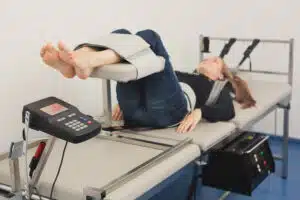 Spinal decompression is a nonsurgical therapy that gently stretches the spine to relieve pressure on compressed discs and nerves. It creates negative pressure to promote disc rehydration and natural healing.
For patients with bulging or herniated discs causing nerve compression symptoms, this treatment is especially helpful in reducing nerve irritation, lessening pain, and restoring mobility. After several sessions, most patients report less discomfort and feel more at ease in their daily activities.
Doctors typically recommend surgery only when conservative care fails to control symptoms or when neurological issues begin to progress. Standard procedures, including spinal fusion or artificial disc replacement, are designed to stabilize the spine and relieve pressure on affected nerves.
While invasive, these surgeries can offer reliable symptom relief and better function for patients whose pain or impairment has not responded to other treatments.
Effective treatment for DDD extends beyond pain relief; it helps people regain control over their daily routines. By addressing the root causes of discomfort and improving spinal function, patients often experience these meaningful, lasting improvements in quality of life.
 Reduced pain and stiffness that lead to greater physical comfort and ease of movement.
By combining clinical care with supportive habits, patients can achieve consistent progress and maintain the mobility they need to stay active.
Degenerative disc disease symptoms are common as we age, but they don’t have to define your life. With an early evaluation and a plan built specifically for you, it’s possible to manage that daily discomfort and regain a sense of normalcy in daily movement and activity.
At Allied Pain & Wellness, professional chiropractic care is a central part of our degenerative disc disease treatment in Burbank. Dr. Shahen Simian works closely with you to help you find a long-term strategy for spinal health. Take that first step and schedule a consultation today. It's time to reclaim your life.

Monday: 9:00am-7:00pm
Tuesday: 9:00am-7:00pm
Wednesday: 9:00am-7:00pm
Thursday: 9:00am-7:00pm
Friday: 9:00am-7:00pm
Saturday: 9:00am-2:00pm
Sunday: Closed